
L4 Forget the Finish Line: Why Systems Beat Goals Every Time

The Problem with Winning.
- We live in a goal-oriented society. From the moment we enter school, we are trained to focus on the outcome. We set targets for our grades, our weight, our careers, and our bank accounts. We believe that if we just stare hard enough at the prize, we will eventually get there.
But consider this: Winners and losers have the exact same goals.
Every Olympian wants the gold medal. Every candidate wants the job. If successful and unsuccessful people share the same goals, then the goal cannot be what differentiates the winners from the losers. The goal isn't the difference maker. The machine behind the goal is.
The Distinction:
- Maps vs. Compass It is critical to define our terms before we dismantle them.
- A Goal is a specific result you want to achieve. It is a destination. (e.g., "I want to lose 10 pounds.")
- A System is the collection of daily habits that get you there. It is the vehicle. (e.g., "I eat vegetables at every meal and walk for 20 minutes after dinner.")
If you are a coach, your goal is to win a championship. Your system is how you recruit players, how you manage locker room morale, and how you structure practice every afternoon.
Here is the radical question: If you completely ignored your goal and focused only on your system, would you still succeed? The answer is yes.
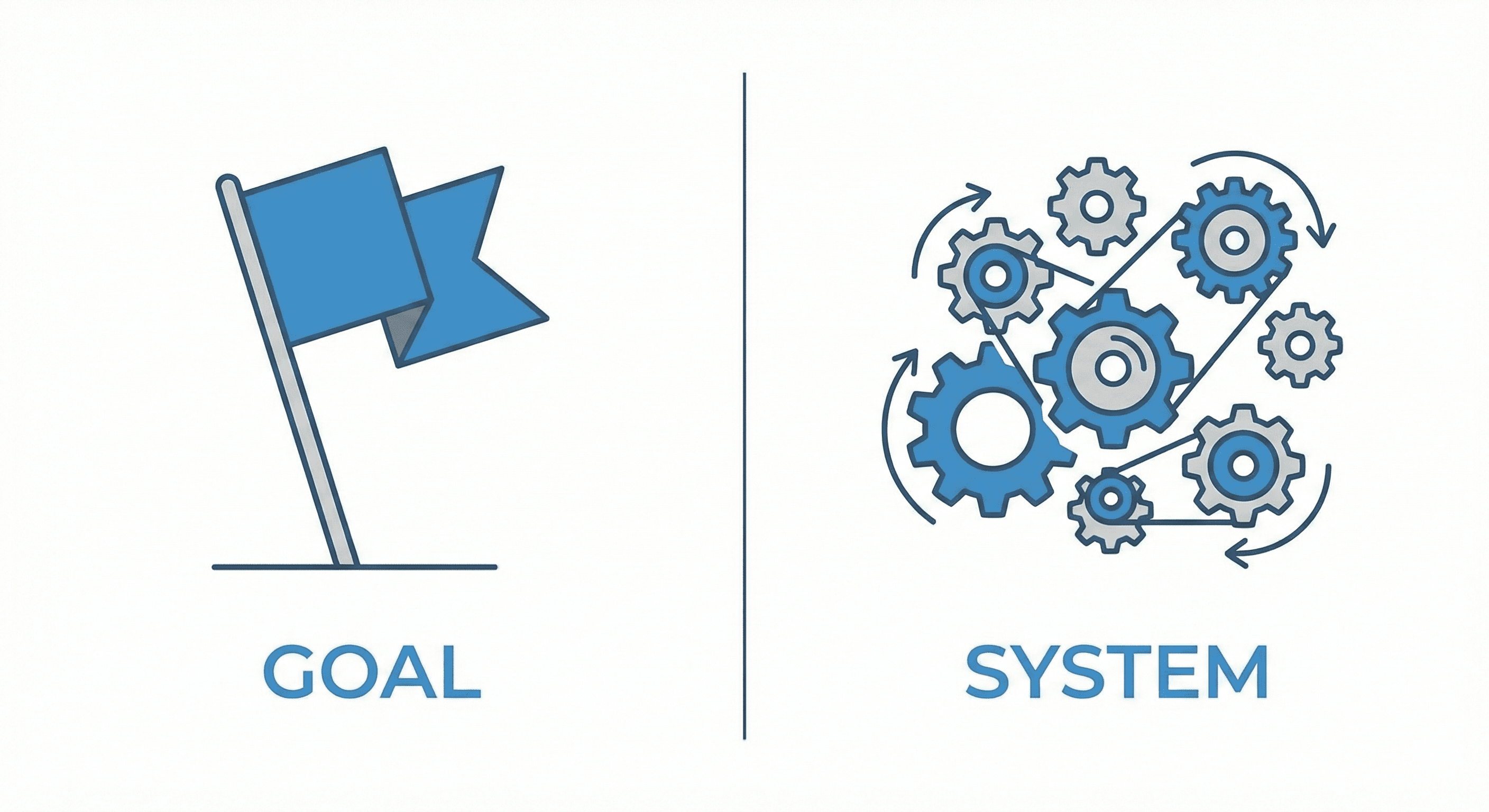
Mechanisms over Milestones.
3 Reasons to Ignore Your Goals
Focusing too heavily on the outcome doesn't just fail to help; it often actively prevents you from succeeding. Reliance on goals creates a "Yo-Yo" existence. Here is the psychology behind why goals backfire.
1. The Happiness Gap.
- When you set a goal, you are implicitly saying: "I am not good enough yet, but I will be when I reach my target."
You defer your happiness to the future. You live in a constant state of failure until the moment you succeed. And if you do succeed? The feeling of victory lasts for moment, and then you are left empty, looking for the next target.
2. The Yo-Yo Effect.
- Goals are temporary fixes. Imagine you have a messy room. If your goal is to clean it, you will summon the energy to clean it once. But if you don't change the sloppy habits that made it messy, you will be looking at a dirty room again in a week.
When a runner finishes a marathon, they often stop training. The motivation is gone because the goal is gone. Systems keep you running forever.
Case Study:
- The British Cycling Team For 100 years, British cycling was mediocre. They had won almost no gold medals. Then, a new performance director changed everything. He didn't set a goal to "Win the Tour de France." He set a system to improve every tiny detail by 1%.
They redesigned the bike seats to be more comfortable. They rubbed alcohol on the tires for better grip. They even hired a surgeon to teach the athletes how to wash their hands to avoid catching a cold.
They didn't focus on the finish line; they focused on the process. Five years later, they dominated the Beijing Olympics, winning 60% of the gold medals available.
Compound Interest
Small improvements in your system don't seem like much on any given day. But like compound interest in finance, they explode over time. If you get 1% better at your system every day for a year, you will end up 37 times better by the time you are done.
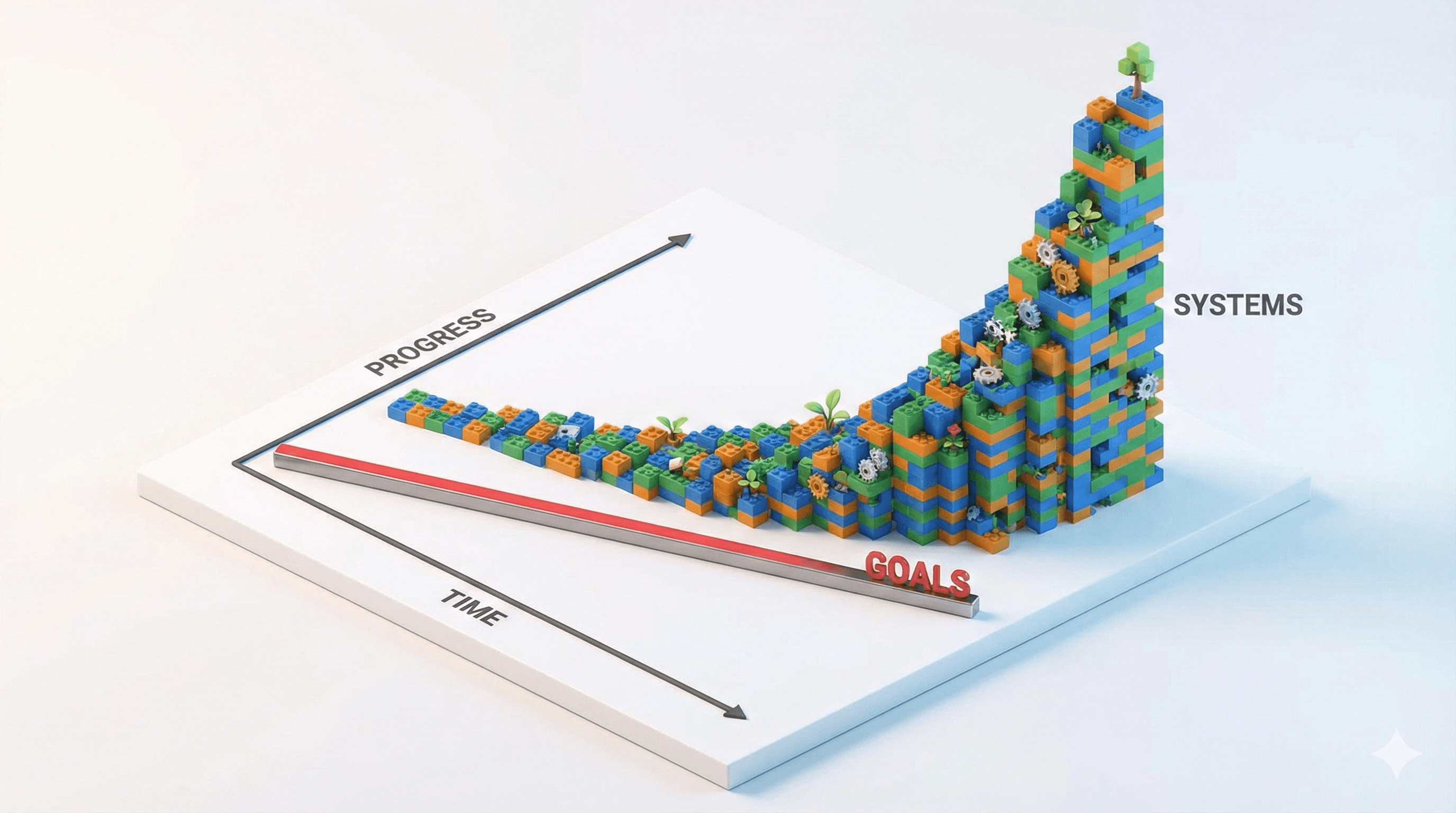
Consistency compounds over time.
Fall in Love with Boredom.
- This is the hardest part. True success is not a singular moment of glory with fireworks and applause. It is the accumulation of boring, standard days.
If you go to the gym for three days, you will not see a change in your body. Most people quit here because the "Goal" hasn't been met. The Systems thinker knows that the results are stored.
You must fall in love with the boredom of the process. You must find satisfaction in doing the reps, writing the words, or making the calls, regardless of the immediate outcome.
The Identity Shift
Ultimately, this is about changing who you are, not just what you do.
- Goal-oriented: "I want to write a book."
- System-oriented: "I am a writer." (And writers write every day).
- Goal-oriented: "I want to run a marathon."
- System-oriented: "I am a runner." (And runners run, regardless of the weather).
You do not rise to the level of your goals. You fall to the level of your systems. If you want better results, forget about setting a new target. Instead, fix the machine that runs your day.